1. Introduction
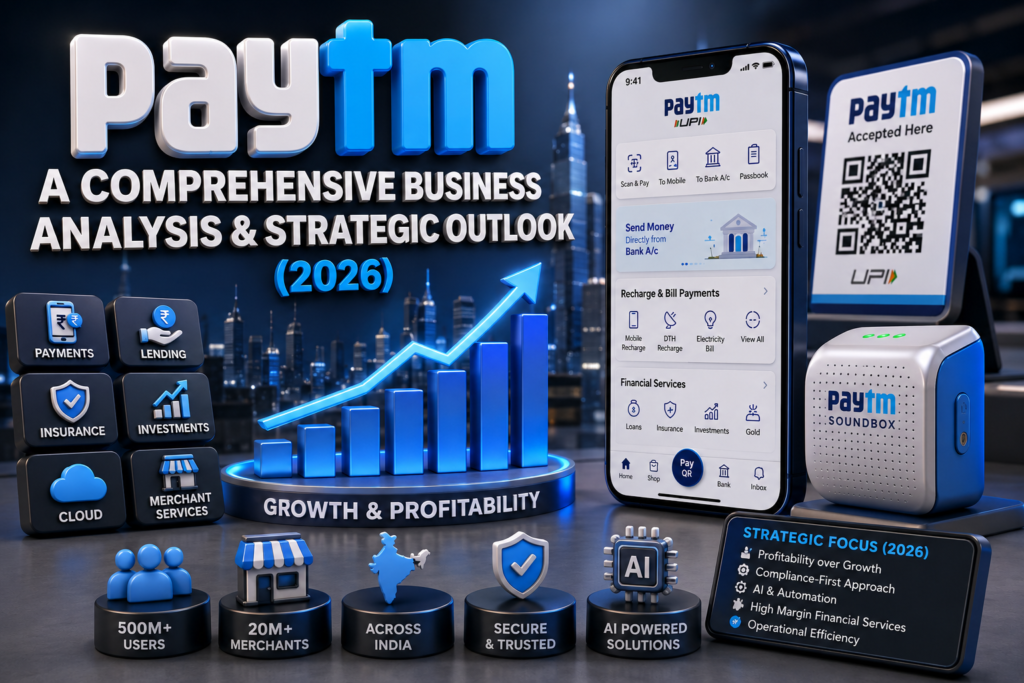
Paytm (One97 Communications Ltd.) has transitioned from a simple mobile recharge platform to a multifaceted financial services ecosystem. As of 2026, the company operates at a critical juncture, balancing rapid technological innovation with rigorous regulatory demands. This report explores the depth of Paytm’s operations, its revenue streams, competitive positioning, and the strategic pivot toward sustainable profitability.
2. Historical Evolution: From Recharge to Fintech Giant
Founded in 2010, Paytm initially served as a B2C platform for mobile recharges and bill payments. The pivotal moment occurred in 2016 during demonetization in India, which accelerated the adoption of digital payments. By 2026, Paytm has evolved into a powerhouse providing:
- Digital Payments: UPI, QR codes, and Soundbox devices.
- Lending Services: Facilitating merchant and personal loans.
- Financial Distribution: Insurance, mutual funds, and stock trading.
- Cloud and Commerce: Ticketing, advertising, and marketing automation.
3. The Revenue Engine
Paytm’s revenue model is designed for a high-volume, low-margin business that seeks to scale through financial services.
| Revenue Stream | Core Mechanism | Growth Potential |
| Payment Services | Transaction processing and MDR | High volume, lower margin |
| Lending | Distribution commissions | High margin, strategic priority |
| Cloud/Commerce | Subscription and commissions | Steady, diversified |
4. Strategic SWOT Analysis
Strengths
- Omnipresence: The iconic QR code and Soundbox have made Paytm synonymous with digital payments in India.
- Ecosystem Depth: Users rarely leave the app, as it spans banking, trading, and bill payments.
Weaknesses
- Operational Costs: Sustaining a massive user base requires high expenditure.
- Regulatory Burden: Intense scrutiny from the RBI necessitates significant investment in compliance.
Opportunities
- Tier-2/3 Expansion: Untapped markets offer significant headroom for growth.
- B2B Financial Services: Strengthening merchant credit lines is a major revenue lever.
Threats
- Market Competition: Fierce competition from Google Pay, PhonePe, and traditional banking apps.
- Cybersecurity Risks: Escalating threats in digital finance require constant investment.
5. The Turnaround Strategy (2026)
In response to market pressures, Paytm has shifted focus toward:
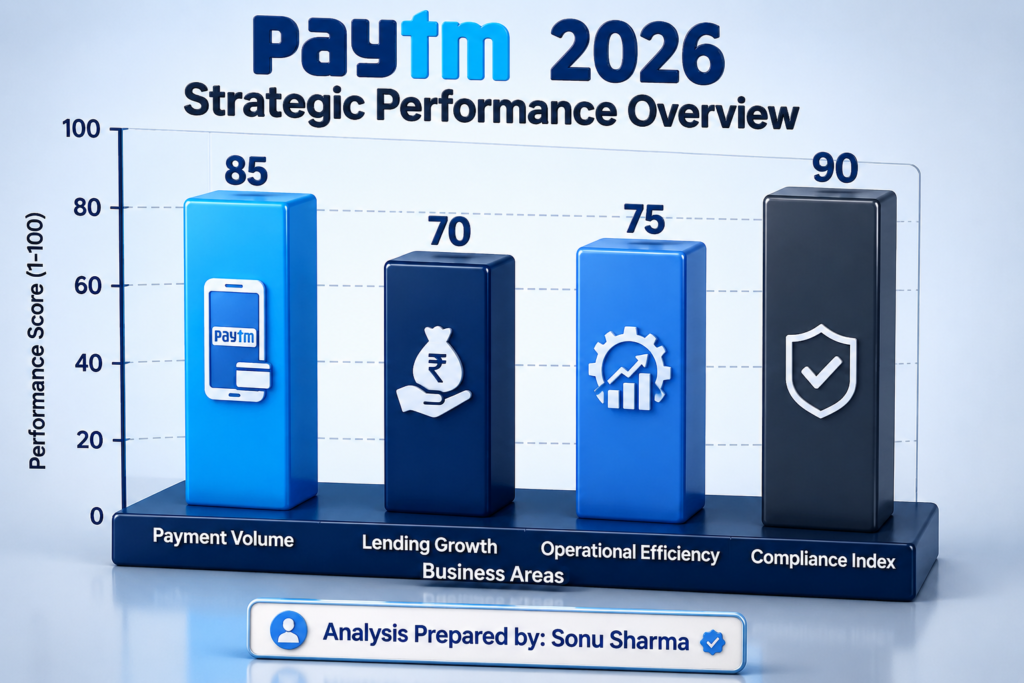
- Profitability over Growth: Moving away from aggressive user acquisition to focus on profitable customer segments.
- Compliance-First Approach: Enhancing internal audit mechanisms to meet regulatory standards.
- AI and Automation: Reducing human-resource dependency in back-end processes to optimize margins.
6. Competitive Landscape
The Indian fintech space is hyper-competitive. Paytm maintains its lead through innovation in hardware (Soundbox) and merchant loyalty. However, PhonePe’s reach and Google Pay’s ecosystem integration continue to challenge market dominance.
7. Future Outlook
The long-term success of Paytm hinges on its ability to transform from a “payments app” to a “financial wealth manager.” By leveraging the vast data collected from its millions of users and merchants, the company is uniquely positioned to offer hyper-personalized financial products.
8. Conclusion
Paytm’s journey is a reflection of the digital transformation of the Indian economy. While challenges regarding profitability and regulation remain, the company’s commitment to fintech innovation remains a benchmark for the industry. Continued focus on high-margin lending and operational efficiency will be the primary drivers of its future value.